
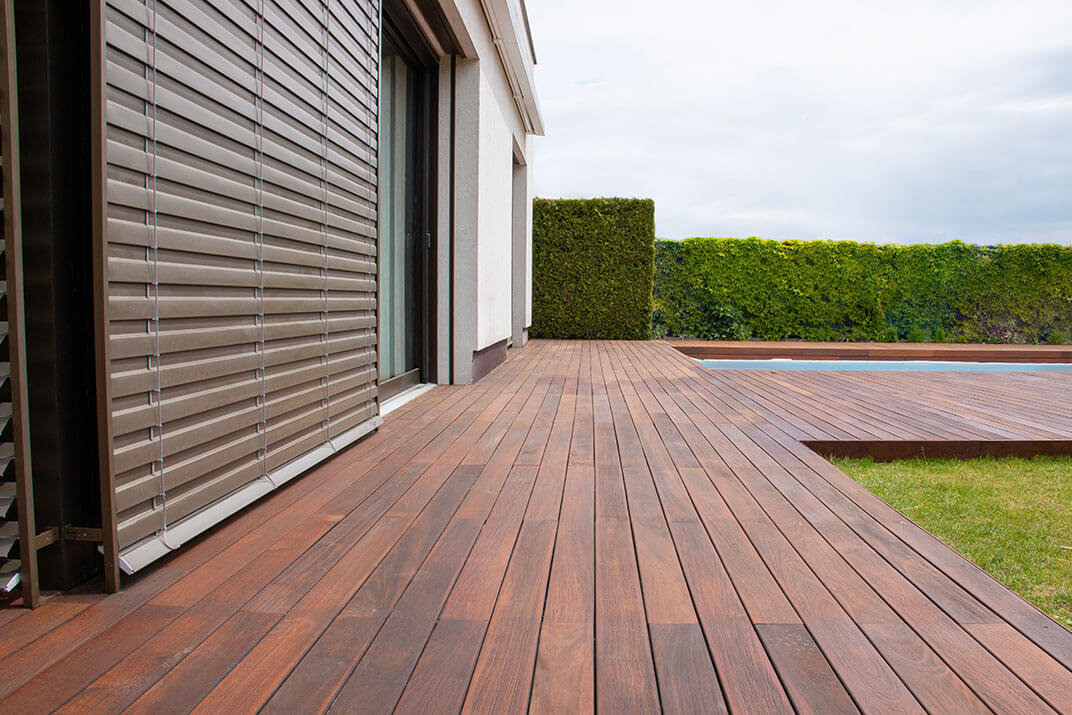
A backyard deck instantly enhances an outdoor space and creates an extended living area to enjoy year-round. However, before any construction can begin, the first thing to decide is what lumber materials you want to use.
There are advantages to using wood, composite, and PVC, though the differences can help you choose one building material over the other. Here are the advantages each provides and questions to consider as you plan your next outdoor project.
Benefiting from the Beauty of Wood
Wood is a timeless outdoor building material that can be stained and customized to suit your backyard aesthetic.
Wood stains, such as Penofin, PPG, and Messmer’s, are available in a range of colors from light brown to dark gray, all of which preserve the wood by protecting it from pests, mildew, and UV degradation.
Lumber materials are available in multiple board sizes and can also be custom-milled to fit specific project dimensions. Wood will also last a long time with the right maintenance and can be used throughout an entire backyard renovation, for decking, railing, and a patio cover, to create a streamlined look.
Softwoods like redwood, western red cedar, and douglas fir are the most popular choices, though hardwood options, including IPE, golden balau, and borneo mahogony also make for beautiful backyard designs.
Why Composite or PVC Boards May Be a Great Fit
Alternatively, composite decking is a go-to choice for many homeowners due to board consistency and the variety of grain choices and colors available.
When using PVC, in particular, there’s a reversible decking option that offers two different finishes for design versatility. With composite, there’s also a wide pricing range to meet specific budgets and project goals. Both options:
- Can be curved, which is harder to do with natural wood
- Have a variety of hidden fastener options to create a smooth, clean look
- Require little maintenance and are backed by brand warranties.
The biggest differences between the two are:
- PVC is typically cooler underfoot because it’s a virgin plastic (vs. a blend of recycled plastic and wood as with composite)
- PVC is lighter in weight and easier to carry than composite
- PVC tends to be pricier than composite
Questions to Consider When Choosing Outdoor Building Materials
Do you want a natural look or a uniform finish of your deck?
The unique beauty of wood embraces the knots, varying shades, and imperfections that come with using a natural product. Whereas, composite boards create a sleek, uniform finish to complement a modern style. Choose the outdoor building material that best complements your home’s exterior and aesthetic.
Do you have kids or dogs that will be regularly walking on your deck?
Wood stays a little cooler under the feet compared to composite. If you’re planning full use of your backyard deck for family-friendly fun, wood may be a better option to protect the pads of little feet and paws from sun exposure.
Do you expect to update your deck’s style in the next decade?
Wood is always available, making it easy to replace boards that match the rest of your deck. On the other hand, certain composite colors and styles may eventually be discontinued, making it more challenging to find the right replacement.
More Lumber Options than the Big-Box, Plus Personalized Service
J&W Lumber is your one-stop shop for all outdoor building materials, with a wide variety of lumber and composite products always in stock and available for custom orders.
At J&W Lumber, you can expect tremendously more options than you’d get at a big-box store, with knowledgeable staff and the welcoming feel of a neighborhood lumberyard. Stop by and see us for your next outdoor project, and let us help you secure all the materials you’ll need to get started.