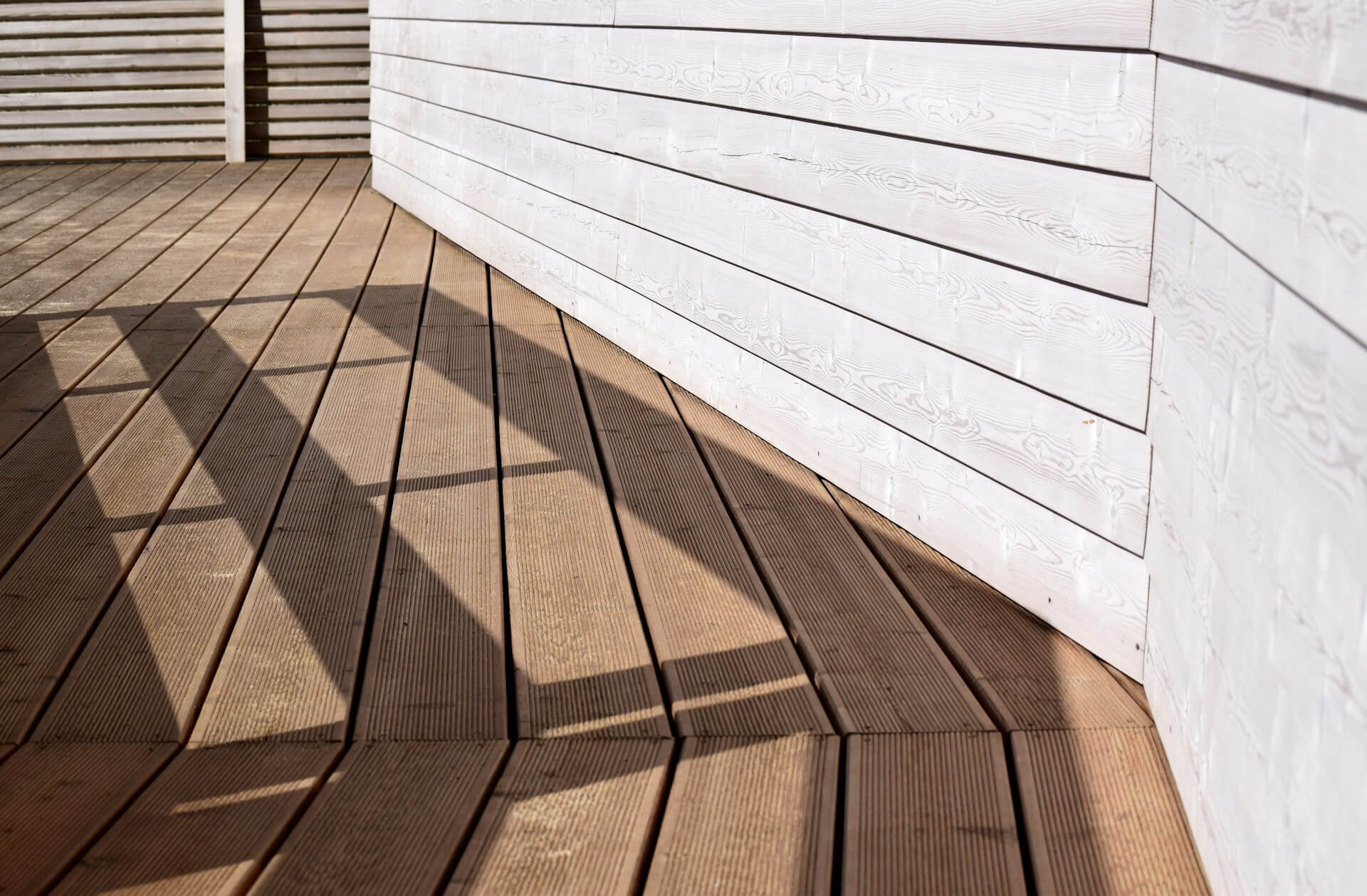
Building a deck adds to the versatility of a backyard. Even a small structure can instantly elevate the look, feel, and use of your outdoor space.
The question is whether to opt for wood decking or composite when creating your ideal aesthetic. There are advantages to each, but to help you decide, we’re comparing the two in terms of heat, cost, and maintenance.
Heat Factor
Natural lumber stays cooler in the heat. Even when the sun blazes down, it will definitely feel warm, but won’t burn the feet.
On the other hand, composite decking, such as Trex, has a heat-mitigating technology to help keep boards cool during the hottest times of the day.
However, not all composite decking is created equally. Some stay cooler to the touch than others, so if you’re interested in a specific brand, make sure to check its features.
Cost-Effectiveness
The evolution of composite decking has made it more on par with wood decking costs. It depends on the exact type of outdoor material used and size of decking you want to build.
Some find long-term value in composite decking due to its long-lasting appeal and low-maintenance convenience. While others prefer the look of natural wood and will build a smaller structure to keep costs down.
The good news is no matter what type of building material you’re drawn to, there are plenty of ways to stay on budget and build a deck that further beautifies your home and gives you an extension of living space outdoors.
Maintenance Requirements
Trex decking requires little more than a regular rinse from the garden hose to preserve the look and integrity of the boards. It also comes with a 25-50-year Limited Residential Fade & Stain warranty, depending on your chosen style.
However, should a board need to be replaced or you want to extend your deck, there’s a chance the same color and/or pattern won’t be available, since new product lines come and go.
With wood decking, you’ll always have lumber available and in stock. It’s best to use an oil-based wood stain to preserve the integrity and look of the wood.
Redwood, Golden Balau, and Red Balau are excellent options, especially regarding the price of IPE. Golden Balau has a rich, golden tone, and when using a darker stain, it looks almost identical to IPE but without the higher cost.
Depending on sun exposure and other seasonal weather conditions, expect a two- to three-year timeframe between re-staining your wood deck.
Is Redwood a Good Choice for Decking?
Yes. Redwood is one of the most popular wood decking options, with many homeowners choosing to use it for their entire outdoor landscape, from railing to fencing, and more.
Its versatility, combined with the natural beauty and warmth it offers, makes this renewable resource a classic choice. J&W Lumber has been Southern California’s redwood specialist for over 60 years, with several redwood types and grades in stock every day.
What Are the Best Lumber Materials for a Wood Deck?
First, decide whether you want to use softwood or hardwood. Hardwood delivers the natural beauty of knots and board variation that many appreciate, while softwood offers warmth but a more uniform color.
Popular softwood options are: Redwood, Western Red Cedar, and 5/4 (Five-Quarter) Boards. And, for hardwood options, Ipe, Red Balau, and Golden Balau are the most popular.
Is Building a Deck a Good DIY Project?
Yes. Depending on the size and complexity of your decking design, you can tackle it as a DIY project. J&W Lumber carries all lumber in stock every day, in addition to composite decking like Trex and TimberTech.
Stop by your local J&W lumber store to get started on your next outdoor project.