
Outdoor Building & Lumber FAQs

Your Outdoor Project Questions, Answered

Get expert answers about lumber, decking, fencing, building materials, delivery, installation, maintenance, and more.


What is J&W’s return policy?

Returns or refunds must be within 3 days of purchase or delivery and
be accompanied by your receipt and the original packaging material.
Returns are subject to a 25% restocking fee. Special Orders are
NON-RETURNABLE and customer is responsible for indicated charges.
Customer must provide contact information on all returns/exchanges.
No cash refunds over $50; a check will be issued to customer within 5
– 7 business days. Quote pricing is on hand only. Prices may change
based on market pricing and availability.

Read More

What’s the best type of lumber for outdoor projects in Southern California?

Redwood is a favorite among homeowners, thanks to its natural beauty, durability, and environmental sustainability.

J&W Lumber has been a redwood specialist for over 60 years and carries several types of Redwood in stock every day. In addition to Redwood, Western Red Cedar and Douglas Fir are also popular lumber choices for outdoor projects, depending on the aesthetic you want to achieve.

Read More

What type of wood lasts the longest outdoors without rotting or termite damage?

Again, Redwood and Western Red Cedar are top choices for decking, railing, and other backyard structures, to eliminate rotting and termite damage, due to the protective tannins these types of lumber has.

However, all wood patio covers, decking, and fencing should be protected using an oil-based stain to protect the boards from the inside out from pests, mildew, and UV damage.

Read More

Should I choose Redwood, Western Red Cedar, or composite decking for my home?

Both natural woods and composite boards are beautiful choices for decking.

Factors to consider when choosing between the two are budget, style, and maintenance. For instance, those who prefer a more natural, rustic look may opt for Redwood or Western Red Cedar.

While homeowners wanting minimal maintenance may opt for the easy-to-clean convenience of composite decking.

Read More

What is the difference between the different grades of Redwood lumber, and which grade should I use?

Redwood grades have different striations and knots, coloring and texture. Choosing a grade is based on the type of outdoor project you have in mind.

For example, Clear All Heart is commonly used for paneling, siding, and trim, while Rough Construction Common is mostly used for fencing or pergolas.

All grades have a natural warmth and beauty homeowners love, but stop by your local J&W Lumber store to see side-by-side comparisons.

Read more about redwood and the grades J&W Lumber carries.

Read More

Is composite decking worth the cost compared with natural wood?

For years, composite decking cost noticeably more than natural wood. However, as the demand for composite has increased and more options have become available, it’s become more affordable.

Also, keep in mind that if the composite decking you choose costs more upfront, it may be worth it for the low-maintenance durability it offers throughout the years.

Composite decking doesn’t require painting or staining (as is needed for wood decking) and most products come with 20+ year warranties.

Read More

What decking material stays coolest in the Southern California sun?

Natural wood options like Redwood and Western Red Cedar often stay cooler to the touch, though there are new heat-resistant technologies for PVC boards, such as Azek, Trex Refuge, and Inteplast, if you prefer composite.

Read More

How much lumber do I need to build a deck or fence?

It depends on the dimensions of your structure; the more materials, the more expensive it will be.

Bring your measurements into one of our local J&W Lumber stores, and one of our representatives will be happy to help you secure outdoor building materials necessary, based on your backyard space and budget.

Read More

What materials are best for building a patio cover, pergola, or outdoor shade structure?

Durability is essential for outdoor structures to protect against weather elements, including UV damage.

There are both wood patio covers and aluminum options to choose from with the ability to add an electronic shade structure and adjust coverage with a lattice roof.

When planning the build, consider your preferred shade amount, design, and level of upkeep to help narrow down your choices.

Read More

What are the advantages of buying lumber from a specialty lumberyard instead of a big-box home improvement store?

One of the biggest advantages of a specialty lumberyard is the staff expertise and customer service you receive.

At J&W Lumber, we carry (and keep in stock) many outdoor building materials not found or consistently sold out at big-box stores.

Additionally, we can discuss product selection based on your project(s), show you different options to compare, and send you home with exactly what you need, all in the same day.

Read More

Can I get help choosing materials if I am doing a DIY deck, fence, or outdoor project?

Yes. If you’re not sure where to start or want to start with a smaller project, we are here to help fulfill your lumber needs. We have a wide variety of wood and composite options in-stock every day.

Though many of our customers come into the store knowing what they want to build, many leave with even more ideas of how to expand their outdoor space, after speaking to one of our representatives.

Stop by any of our stores to get started.

Read More

Can J&W Lumber help with materials for both small DIY projects and large construction projects?

Yes. Homeowners and professional contractors alike appreciate the always-in-stock availability J&W Lumber has for outdoor building materials for projects ranging from smaller backyard improvements to larger-scale projects.

Read More

What should I bring with me when visiting a lumberyard for a project?

The more information you have, the easier it will be to source the materials you need to see your outdoor project come to life.

Bring backyard measurements, photos, and/or style or color preferences into the store. Or, if you’re unsure of where to begin, check out our in-store displays and peruse our products for inspiration.

At J&W Lumber, there’s always a knowledgeable and friendly representative available to help you secure what you need to get started.

Read More

How should I store lumber before starting my project?

Keep lumber properly supported and protected to help minimize unwanted movement, warping, or damage before construction begins. Lay boards flat and off the ground when possible.

Also, lumber should not be stored in direct sunlight and should always be covered with a tarp if stored outdoors, even in the shade.

Read More

How do I choose between wood and aluminum for a patio cover?

There are benefits to both. Wood patio covers offer a natural appearance and can be customized with different lumber species, stains, and architectural details.

Aluminum delivers a different aesthetic, though some options mimic the look of wood.

Homeowners prioritizing minimal maintenance typically prefer aluminum, but consider all factors, including budget and longevity, before making a decision.

Read More

Can I build a raised garden bed with redwood?

Redwood is commonly used for raised garden beds because of its appearance and natural resistance to decay. It also complements many Southern California landscapes and outdoor living spaces.

J&W Lumber makes it simple for you to get started with our GroGreen Garden Boxes. Made of 100% redwood, the 12” tall structure is available in 4’x6’ and 4’x’8’ for immediate in-store pickup.

Read More

How do I choose the right fasteners for an outdoor wood project?

Using corrosion-resistant screws, connectors, and hardware can help improve both the appearance and longevity of the finished project.

J&W Lumber also carries hidden fastener systems to aid in an easier installation process and keep the final look of your outdoor project seamless and secure.

Read More

What type of siding is best for a Southern California home?

Wood, composite, fiber cement, and vinyl siding are all options found throughout Southern California.

Homeowners choose based on their individual design preferences, affordability, fire resistance, and maintenance requirements. Consider each of these factors to determine the best fit.

Read More

Can lumber be custom milled for my project?

Yes. J&W Lumber offers custom milling.

Bring your dimensions into one of our lumber stores and talk through what you’ll need, including patterns, textures, and other specialty architectural details you want for your project.

Read More

What is the difference between rough and surfaced lumber?

Rough lumber generally retains the texture created during the milling process, giving it a more natural or rustic appearance. Surfaced lumber has a smoother, more uniform finish.

Read More

Can I mix different materials when building a deck?

Yes. Mixing materials allows homeowners to truly customize their outdoor space.

From combining wood types with contrasting colors and textures to alternating the placement of the boards to create a unique design, mixing different materials leaves room to create a deck that feels true to your home’s aesthetic and the overall feel you want for your project.

Read More

What type of railing should I choose for my deck?

As with any outdoor building project, consider affordability, design options, and maintenance preferences, as well as any city building requirements.

Railing is available in composite, metal, cable, and wood. Redwood is a go-to choice for its natural warmth and beauty, and when building out other structures in the backyard, whereas some homeowners prefer cable railing to preserve a view.

Read More

What type of fencing is best for privacy?

When building a privacy fence, consider the height of the boards, as well as the space between them.

Wood, vinyl, and aluminum are materials that all work well, but the final choice should be based on the look you want, your budget, and maintenance preferences.

Read More

Does J&W Lumber deliver?

J&W Lumber offers local curbside delivery. Depending on your need and the material type and size we have three delivery types available. Standard delivery; Two Person Delivery and Hand Unload.

We can also deliver out of area and have the ability to ship most material to anywhere in the U.S.

Read More

Do you need a permit to install a patio cover?

Every city and county can have different requirements but here is an example from the San Diego Building code for you to refer to. We always recommend that you check with your local codes to ensure you are compliant. Your local J&W Lumber can help you find out if you are up to your local code.

Patio cover structures that do not exceed 300 square feet of projected roof area may be exempt from a building permit in single family residential zones. Although such patio covers may still be exempt from building permit, they are not exempt from electrical, plumbing, mechanical permit requirements and other building regulations (SDMC 129.0203(a)).” Building permits for any new patio cover or repair or enclosure of an existing patio cover will be required if any of the following conditions occur:

  1. The patio structure is located on a site that contains environmental sensitive lands.
  2. The patio structure encroaches into any required side yards or established setbacks.
  3. The property is located in the Coastal Zone or any site regulated by a Planned Residential Development (PRD) permit or Planned Infill Residential Development (PIRD) permit.”
Read More

Does J&W Lumber offer contractor discounts?

J&W Lumber offers the same low price to every one of our customers. We work hard to ensure that we are competitive and often offer the best priced material in our market.

We have been the leaders in San Diego lumber and building supply sales for over 50 years and will continue to offer the best value for 50 more.

Read More

Does J&W Lumber offer installation?

J&W Lumber is not a contractor or installer. We do however have some of San Diego’s best contractors as our regular customers.

With that in mind we do offer a contractor referral program and help you every step of the way. Our process will first inform you of your material costs and provide you with three qualified contractors to complete your project. We will be following up with you to ensure our referral treats you with the same service level you have come to expect from J&W Lumber.

Disclaimer: We are not contractors and also cannot guarantee the work of any referral we work. All labor is negotiated between you and the contractor. J&W does not except payment for any contractor.

Read More

What Are the different grades of Redwood Decking?

J&W Lumber offers the most redwood grades of any supplier in Southern California that can fit any project budget.


Construction Common – Grade containing knots of varying sizes and other slight imperfections. Contains Sapwood.

B Grade – Quality grade containing sapwood, limited knots and other characteristics not permitted in Clear

Construction Heart – A heartwood grade containing knots of varying sizes and other slight imperfections. Termite and Rot Resitant. Best with ground contact.

Read More

Do termites eat Redwood?

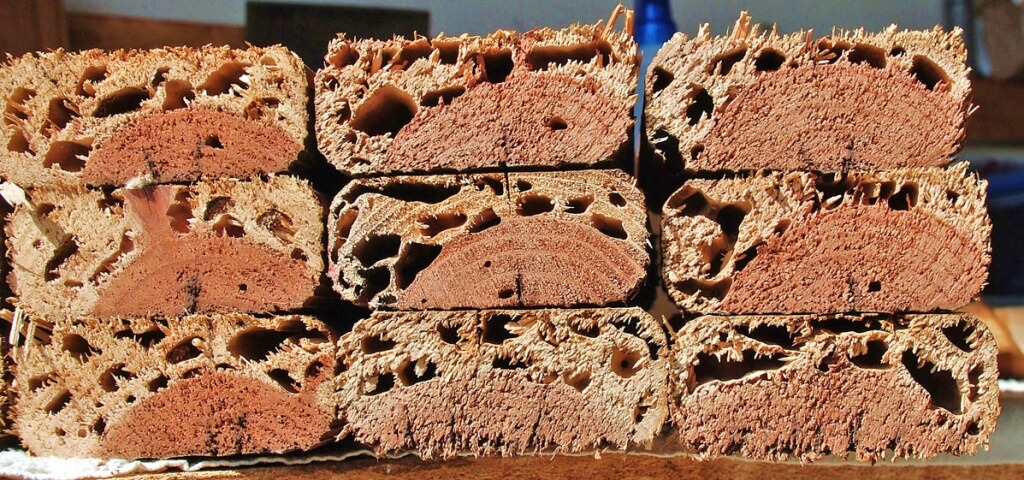
Redwood is a natural deterrent to termites. It is the “heart” of the redwood that is a repellent. The Sapwood or white part of the redwood board is not as resistant and fair game. Look at these pictures of termite damage on redwood. You will notice the “heartwood” is not even touched.

termites-in-redwood

Read More

What is the joist spacing for composite deck boards?

Spacing for all 1x and 5/4 composite deck boards are 16″ on center. 2x composites will span 24″ on center.

Read More

How long does stain last before it needs to be re-applied?

Depending on your deck’s exposure to direct sunlight and precipitation elements, for Fir, Cedar and Redwood we recommend re-staining every 2-3 years.

The harder the wood the more frequent the applications will be needed IPE and Mangaris may need to be re-stained every year. With the oil stains we sell follow the rule of thumb that Less is More. If you over-apply the stain the results can remain tacky and attract dirt.

Read More

What is the actual size of surfaced lumber?

Nominal sizes are not the same as actual or net sizes… Softwood lumber is customarily referred to by nominal sizes such as 1×6, 2×4, 4×4 and so on. In these descriptions, the first number represents the thickness; the second number represents the width. It is important to note that what we call a 2×4 or 1×6 is usually a piece of lumber smaller than it’s nominal size. For example, a smooth Redwood 2×4 would measure 1-1/2″x3-1/2″.

Read More